Pedro Silva's Blog

Hi, I’m Pedro. This is where I think out loud: short notes, new ideas, things I am working through and the occasional story worth keeping.


The delusion that got you here

Not everything that got you here deserves to be trusted. Some of it just survived.

Marshall Goldsmith calls it the success delusion. Once something has worked, we confuse the behaviours that produced the result with the behaviours that survived it.

The people he coaches are not failing. They are already successful. Their problem is smaller and harder to see: the higher you go, the more a suggestion sounds like an order. Nobody tells you.

Read more →

The B player is a measurement problem

I read an old article this week. “Let’s Hear It for B Players,” Harvard Business Review, June 2003. The argument is that companies chase stars and neglect the steady performers who keep the place running, and that this is a costly mistake. 23 years later it still circulates, which is either a compliment to the writing or a sign nothing changed.

What caught me was the label, more than the argument itself. B player. We took the grade from school, where a B means good but not top, and we now apply it to adults as if a whole working life could sit on one scale. The scale measures something. I am less sure it measures what we think it does.

Read more →

The scarce resource isn't technology

I was again in another meeting where AI appeared before the agenda come up. Not because we were there to discuss it. It has simply become the slide every strategy deck seems to need, somewhere between growth and efficiency.

What I can’t tell, sitting in those rooms, is whether we keep raising it because it matters that much or because everyone else is raising it. Either way, I am less convinced than I was that AI itself will be the advantage.

Read more →

About minimalism

I used to think minimalism was about owning fewer things, the white walls and bare shelves that fill every minimalist photograph. Over time I started to doubt that. What gets removed in those photographs is visible. What is actually being reduced, I think, is something else: the number of decisions a life demands.

Every possession asks for something. It has to be stored and maintained, and eventually repaired or replaced. Every commitment keeps a piece of your attention long after you agreed to it, and information behaves the same way: an article saved for later, a podcast still in the queue, a browser tab that insists you revisit it. None of this feels heavy by itself. Together it adds up to a day full of small obligations nobody decided on purpose.

Read more →

Keeping life in order with Workflowy

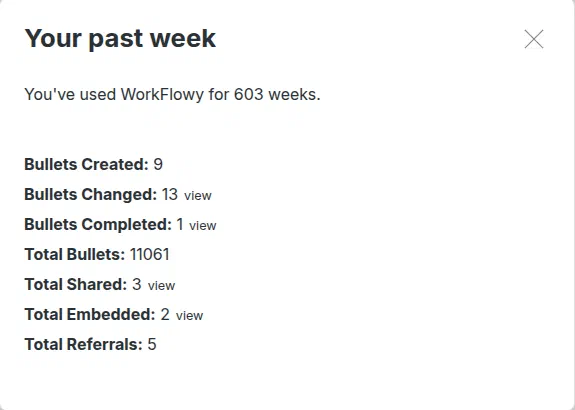
For 603 weeks I have kept my thinking in the same place. Workflowy holds 11000 bullets now. Ideas, half-formed arguments, todos, plans, the shape of projects I have not started. When I want to know what I think, I open it and look.

My Workflowy stats, last week.

It has been there the whole time. While everything around it changed, the place stayed the same. This is the tool that keeps my life in order.

Read more →

The fractional life

A job posting I came across last week was for a fractional executive assistant. Not a fractional executive, an assistant to one, split across however many people needed a slice of her calendar. I found myself wondering how much of any of those calendars she actually holds in her head.

Fractional work has spread well past the C-suite by now. Executives sell their time in slices. Owners hold stakes instead of companies. Even the people who support those executives get sliced the same way. Friendships get described this way too, half present, already checking the time on the way out.

Read more →

What success is

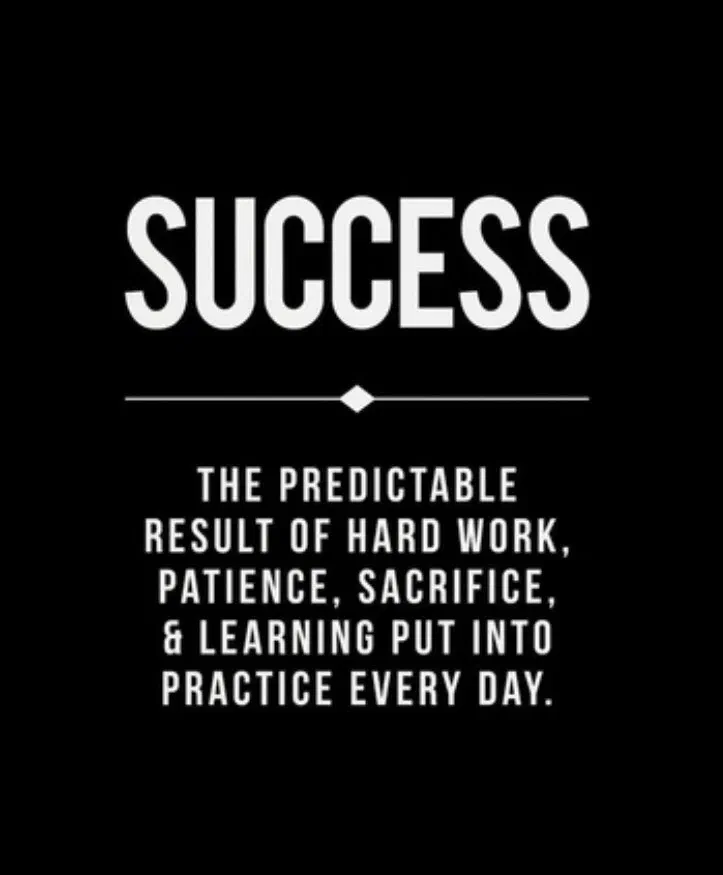
Success: The predictable result of hard work, patience, sacrifice, and learning put into practice every day.

I'm addicted to this backpack

One bag, two jobs done well. And an observation about why I like it so much.


I recently bought the Knack Pack Small 2 and I’ve been using it consistently for commuting (when I have to commute, that is, because I work a lot from home). And as it expands for short one or two day trips, it’s a perfect bag doing two jobs. That is the practical reason I bought it, and the practical reason holds. It is genuinely good at both.

Read more →

Unique knowledge

“You get rewarded for unique knowledge, not for effort. Effort is required to create unique knowledge.” — Naval Ravikant.

Post on X